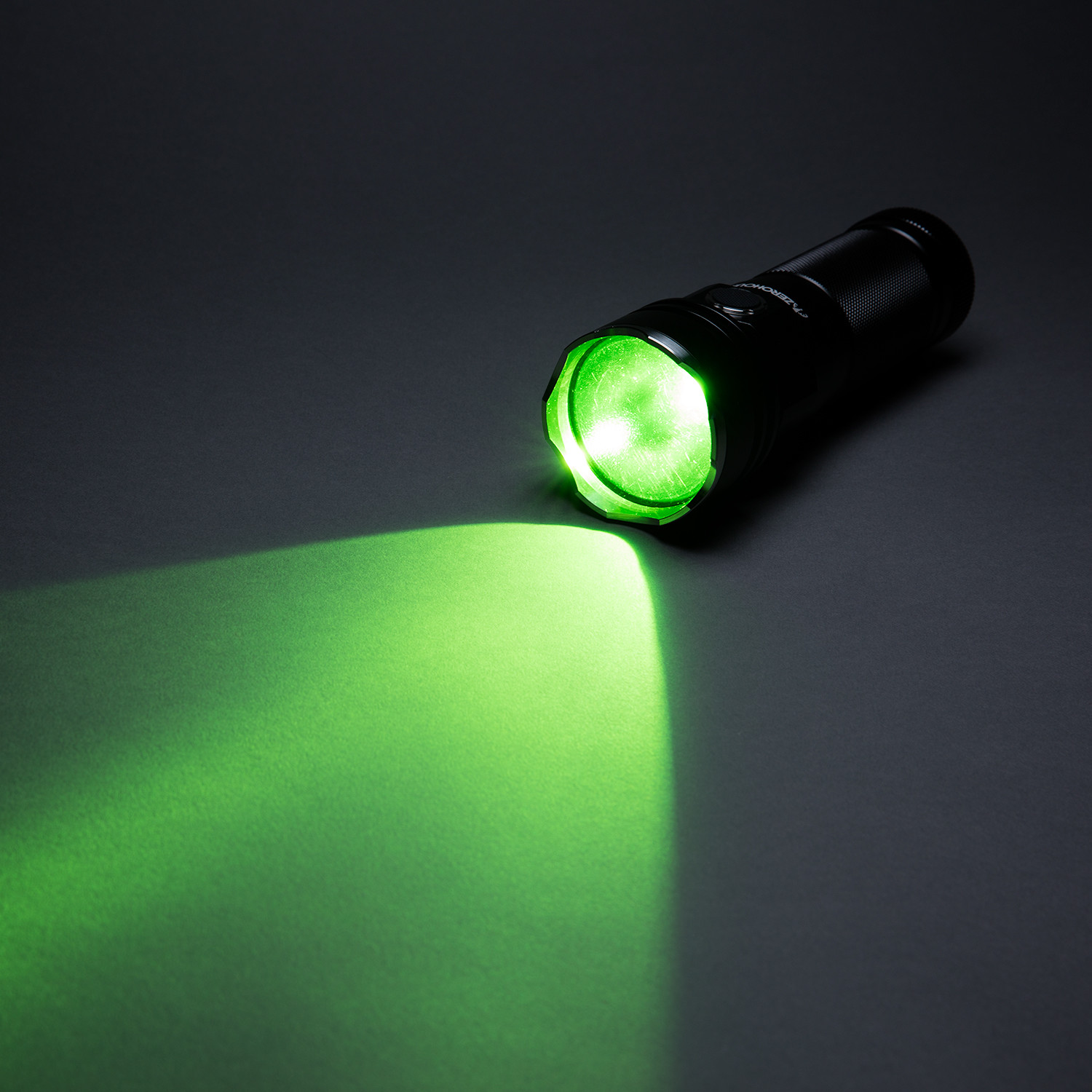
A red filter is most commonly used for hunting and spotting animals, since many animals cannot see well in the red spectrum. Red light also preserves our natural night vision and is effective at providing better visibility in fog and smoke.
Members of the military often use a red LED flashlight when conducting night operations. This is because the red light helps them navigate in remote areas that cannot usually be seen from a great distance. As a result, service members can complete their mission while simultaneously reducing their chances of being spotted by the enemy.
People sometimes use a red LED flashlight for stargazing. This is because looking for constellations should be done in complete darkness whenever possible, yet some light is needed in order to reach an optimum viewing spot. Using this red flashlight can help people get into position safely without creating light pollution that would reduce the number of visible stars.
A red LED flashlight does not have to be used at night time. One that has a cone-shaped head is often used to park cars at sporting events. It may also be used by emergency workers to direct traffic whenever there has been an automobile accident, whether at night or during the day. This is done by moving the flashlight back and forth in the direction cars need to travel.
Members of the military often use a red LED flashlight when conducting night operations. This is because the red light helps them navigate in remote areas that cannot usually be seen from a great distance. As a result, service members can complete their mission while simultaneously reducing their chances of being spotted by the enemy.
People sometimes use a red LED flashlight for stargazing. This is because looking for constellations should be done in complete darkness whenever possible, yet some light is needed in order to reach an optimum viewing spot. Using this red flashlight can help people get into position safely without creating light pollution that would reduce the number of visible stars.
A red LED flashlight does not have to be used at night time. One that has a cone-shaped head is often used to park cars at sporting events. It may also be used by emergency workers to direct traffic whenever there has been an automobile accident, whether at night or during the day. This is done by moving the flashlight back and forth in the direction cars need to travel.